The Building Has Been Vacant for Two Years. What Are You Really Taking On?
An empty building can look surprisingly good. Its operating history may tell a very different story.
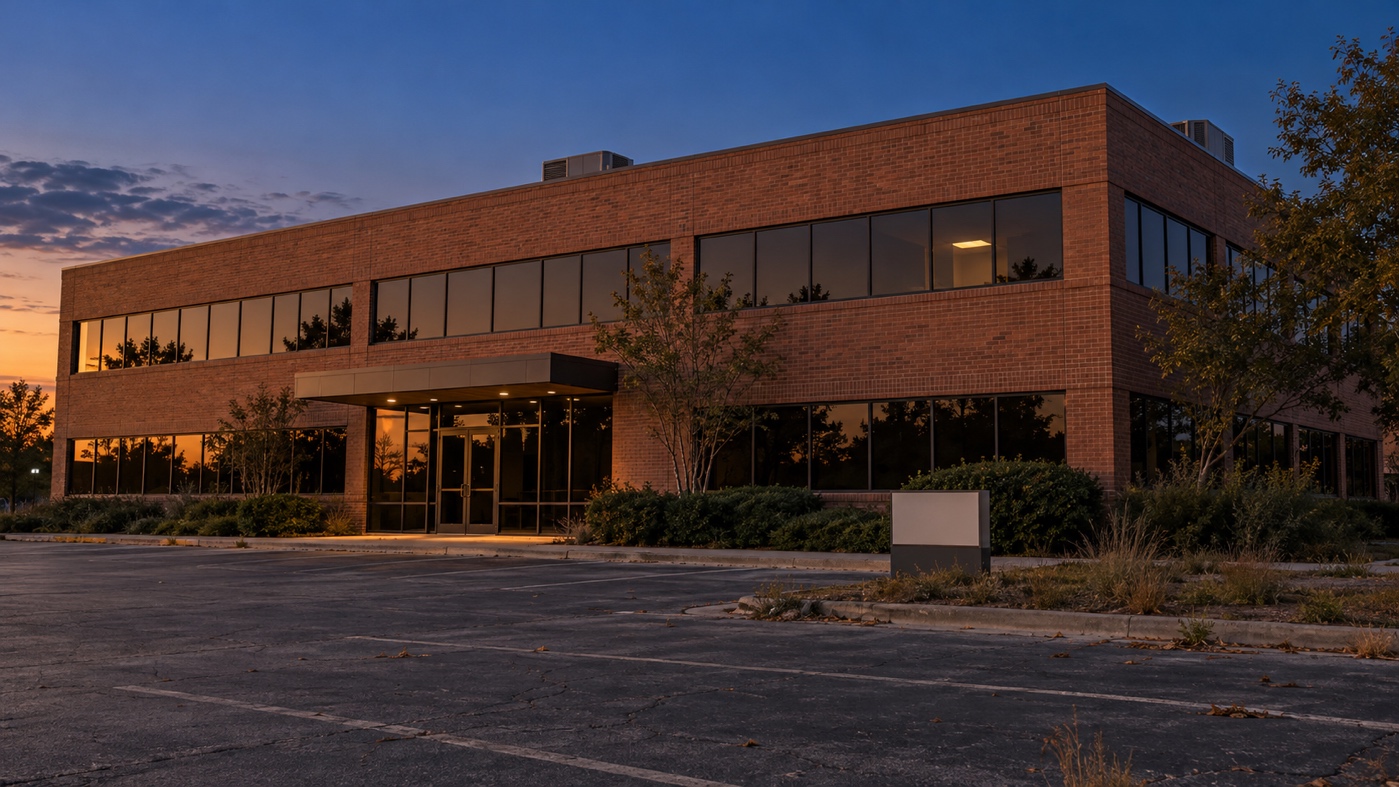
What happens to a commercial building when the occupants leave, the doors are locked, and nobody returns for two years?
At first, you might think that’s a good thing. The carpets aren’t wearing out. Doors aren’t being opened and closed hundreds of times a day. Plumbing fixtures aren’t being used, and the heating and air-conditioning equipment may have accumulated very few operating hours.
A prospective tenant or buyer might reasonably conclude that the building has enjoyed two years without much wear and tear.
But has it?
A building doesn’t stop aging simply because nobody is using it. The roof continues to endure rain, wind, hail, sunlight, and temperature changes. Moisture still moves through materials. Mechanical components remain exposed to the environment. Lubricants age, seals deteriorate, and drainage systems may become obstructed.
What often disappears during vacancy isn’t deterioration. It’s the routine attention that might have discovered it.
And that’s where our story begins.
The Medical Office That Had Been Sitting Empty
During a recent Property Condition Assessment of a Dallas medical-office building, I encountered a property that had reportedly been closed for approximately two years.
The prospective tenant, a physician who provides emergency medical services, was considering a long-term lease. From that perspective, the building’s previous occupancy was encouraging. It had already served a similar purpose, and much of the interior remained in place.
But I was interested in something else.
What had happened to the building during those two years?
As the inspection progressed, moisture-related conditions began raising questions. There were areas of staining, concerns involving condensate, and other observations that warranted closer examination.
One of the most important areas was the roof.
Getting access wasn’t straightforward. It took repeated efforts over approximately two to three days before I could examine the rooftop mechanical equipment.
A prospective tenant can walk through examination rooms, corridors, offices, and reception areas and come away with a reasonably favorable impression. Yet some of the equipment responsible for keeping that building usable is sitting overhead, out of sight.
When I finally reached the roof, the mechanical equipment told a different story.
The air-conditioning systems exhibited evidence of age and deferred maintenance. Condenser fins had sustained physical damage consistent with hail exposure. Condensate-management arrangements raised concerns about water discharge and possible relationships to moisture conditions inside the building.
The roof visit didn’t establish the remaining useful life of every unit. That would require further evaluation, operating information, and maintenance records.
But it did change the questions I was asking.
When Less Use Doesn’t Mean Less Deterioration
We’re accustomed to associating mechanical wear with operating hours. Bearings wear, belts stretch, motors run, and compressors cycle. Eventually, components require replacement.
But what happens when equipment sits idle?
Some mechanical systems benefit from regular operation because movement distributes lubricants and allows developing problems to become apparent. Equipment left unused may experience deterioration that has little to do with accumulated operating hours.
It helps to separate two different kinds of aging, because they call for different follow-up.
The first is the wear that comes from sitting still. Belts take a set and crack. Bearing lubricant settles, and seals that regular operation would keep supple begin to dry out. Dampers and contactors can stick. Condensate pans collect debris, and an idle rooftop unit can become a home for birds, rodents, and insects. These problems usually reveal themselves at startup, which is why a supervised start-up by a qualified technician is worth far more than simply turning the thermostat back on and hoping for the best.
The second is the aging that continues whether the equipment runs or not. Refrigerant circuits corrode and develop slow leaks. Electrical connections loosen and oxidize through two years of temperature and humidity swings. Coils take hail damage, and exposed materials degrade under the Texas sun. Idleness doesn’t cause these conditions, and simply running the equipment won’t reveal all of them. They call for testing: a refrigerant leak check and performance evaluation, and an examination of electrical connections under load.
That doesn’t mean every idle unit is damaged. Properly preserved equipment can remain serviceable for extended periods.
But without maintenance records and appropriate evaluation, how would the tenant know?
A ten-year-old unit with little recent use isn’t necessarily in better condition than one that has operated regularly and received proper maintenance.
And when that equipment is restarted under a full Texas summer cooling load, its actual condition may become apparent rather quickly.
What Happens to the Air Nobody Is Breathing?
There’s another part of a vacant building that prospective tenants and buyers seldom see, and it may be one of the most important.
The air-handling system.
In the medical-office building, every thermostat in the space was raised from 74°F to 84°F between my first visit and my second. Whether that was meant to reduce operating expenses or was simply an oversight, I couldn’t say.
As a cost-saving measure, it sounds reasonable. Nobody is occupying the building, so why maintain normal working temperatures?
But what happens to the humidity?
With relatively little internal heat load, the cooling system may cycle infrequently. That reduces its opportunity to remove moisture from the air. Depending on infiltration, ventilation, equipment configuration, and outdoor conditions, elevated relative humidity can persist even while the thermostat indicates an acceptable temperature.
An 84°F setting doesn’t automatically create microbial growth. But neither does it establish adequate humidity control.
Now consider the places nobody routinely examines in a vacant building.
Beneath sinks, inside air-handling equipment, around supply registers, on susceptible duct-liner materials, and within concealed spaces, moisture and accumulated debris can create conditions favorable to microbial growth.
Airborne spores are common in indoor and outdoor environments. Their presence alone doesn’t establish a problem. What matters is whether sufficient moisture and suitable conditions allow growth to develop.
A building may look perfectly clean while conditions within concealed components tell a different story.
Teresa Gianopoulos of Culley Enviro sees what happens when a vacant building’s conditions are allowed to drift. “Setting the thermostat higher or lower depending on the season looks like a cost saving,” she notes, “but the longer a space sits outside an optimal temperature, the more problematic it can become. Keeping air moving helps control relative humidity, and a conditioned space is the best protection against mold. The more dust that accumulates, the more perfect the environment becomes for mold to begin colonizing.”
Filters may not have been replaced for months. Cooling coils and condensate pans may not have been inspected. Ductwork may contain accumulated debris or moisture-related contamination.
Replacing a filter doesn’t necessarily correct contamination elsewhere in the air-distribution system. Conversely, finding dust inside a duct doesn’t automatically justify chemical sanitization.
The question is what the evidence supports.
Teresa is equally clear that mold doesn’t have to be frightening. “Mold never has to be scary or a deal breaker on a property, but it can be very expensive to clean up properly, especially when there’s no obvious source like a burst pipe or a roof leak to tell you where to focus. We are never in a completely mold-free environment, not even on a good day.”
The harder cases are the ones nobody can see. “Growth that develops inside wall cavities while a building sits vacant is commonly called vapor pressure-dominated mold,” she explains. “It forms on the back of drywall and along the framing, and it’s difficult to treat without removing material. There’s no X-ray vision for the inside of a wall. When the building returns to a conditioned space, that growth may go dormant. It stops producing active spores and stops degrading materials, but dormant spores can still make their way into the air that people and pets breathe.”
“Everyone reacts differently to mold,” she adds. “Unlike lead or asbestos, there are no established exposure limits for mold. It’s a health concern and a structural concern, and the combination of the two is not what anyone wants in a home or a business.”
This is where an expanded indoor environmental investigation may become appropriate.
A qualified specialist can evaluate humidity conditions, inspect air-handling equipment, examine suspect surfaces, and determine whether targeted sampling would help answer specific questions.
The most useful investigations begin with those questions rather than a general request to “test the air.” Where has moisture been observed? What do the cooling coil, condensate pan, and duct interiors actually look like? Has anyone recorded relative humidity, even on a thermostat display? A well-scoped investigation maps moisture first, inspects the air-handling system second, and samples only where a result will answer a defined question. When air samples are collected, an outdoor sample taken at the same time provides the comparison that gives the indoor results meaning.
Air sampling may provide information about airborne particles or microbial material under the conditions present during collection. Tape-lift sampling can help characterize material observed on a particular surface.
The two methods answer different questions, and neither establishes the overall health of a building by itself.
Sampling locations, operating conditions, moisture history, and laboratory interpretation all matter. There is no universally applicable air-sample result that independently proves a building is safe or unsafe.
For a building returning to medical use, those questions deserve particular attention. Ventilation, filtration, humidity control, and environmental conditions should be evaluated against the requirements of the intended healthcare functions.
Those requirements are specific. ASHRAE Standard 170, Ventilation of Health Care Facilities, sets expectations for air changes, pressure relationships, filtration, and humidity that vary with how each space is used. A general medical office, a dental suite, and a procedure room don’t ask the same things of an air-handling system, and equipment that was adequate for the previous tenant may not be adequate for the next one.
The tenant needs more than assurance that the air conditioner turns on.
The tenant needs to understand whether the building’s environmental systems are suitable for the occupancy being planned.
The Roof Wasn’t the Only Concern
A commercial roof isn’t simply a waterproof covering. It’s also a working platform supporting mechanical equipment, penetrations, drainage components, piping, and electrical connections.
Those systems interact.
Consider condensate. Air-conditioning equipment removes moisture from indoor air, and that water must be collected and discharged appropriately.
If a drain becomes obstructed, disconnected, damaged, or improperly routed, water can accumulate where it was never intended to remain.
Depending on the construction, that water may reach roof penetrations, flashing transitions, or other vulnerable areas.
In the medical-office assessment, the relationship between rooftop condensate arrangements and observed interior moisture conditions warranted further investigation.
But finding questionable condensate piping and a stained ceiling below it doesn’t automatically prove that one caused the other.
Water can travel through concealed construction before becoming visible. The point where moisture appears may be some distance from where it entered.
Infrared thermography can help direct that investigation under suitable environmental conditions. Thermal patterns may identify areas warranting closer examination, but they don’t independently establish moisture content, leak source, or causation.
The camera contributes evidence.
The interpretation still requires judgment.
What About the Electrical Systems?
During this assessment, infrared examination of accessible electrical equipment did not reveal significant thermal anomalies under the observed conditions.
That’s useful information, but what does it establish?
A lightly loaded electrical system may not exhibit thermal patterns associated with defects that become more apparent under normal operating loads. Equipment that has remained inactive may also require inspection, maintenance, or testing before returning to service.
This is where the difference between idle wear and time-related aging matters. A connection that loosened or corroded during two years of heat and humidity may sit quietly while the building draws almost nothing, then announce itself once a full medical practice is running.
A clean thermogram doesn’t establish that every electrical component is free of defects.
It establishes what was observed under the conditions of that examination.
That distinction becomes particularly important when a new occupant plans to install additional equipment or substantially change the building’s electrical demand.
What Is the Client Actually Paying For?
The purpose of an ASTM E2018-24 Property Condition Assessment isn’t to guarantee that every concealed deficiency will be discovered.
It’s to provide a reasonable baseline understanding of the property’s physical condition within the agreed scope, identify material observed deficiencies, and help the client understand where additional investigation may be warranted.
In practice, that means a walk-through survey of the site, the building, and its accessible systems; a review of whatever documents are available; interviews with people familiar with the property; and opinions of probable cost to address the material physical deficiencies that were observed. It is a visual, non-intrusive assessment. It doesn’t involve opening walls, dismantling equipment, or testing how systems perform under load.
For a vacant building, maintenance history can be just as revealing as appearance.
Which systems remained operational? Was preventive maintenance continued? Were roof drains inspected? Was the interior environment controlled? Were plumbing systems managed during inactivity? What happened after severe weather?
And perhaps most importantly, were humidity levels monitored, or was everyone relying on the thermostat?
When those answers aren’t available, uncertainty becomes part of the decision to sign or to buy.
An ASTM E2018 assessment doesn’t automatically include comprehensive indoor air quality testing, microbial sampling, or healthcare ventilation verification. When vacancy history, observed moisture conditions, or intended future use raise concerns, the inspector should identify the need for appropriately scoped specialist evaluation.
The medical-office assessment illustrated how several seemingly separate observations can become connected. Interior staining raises questions about moisture. Rooftop equipment reveals maintenance concerns. Condensate arrangements suggest possible pathways requiring investigation. Electrical thermography provides useful but limited information. Environmental conditions may require a separate specialist.
No single observation tells the whole story.
And that’s why I don’t believe technology can replace an experienced inspector. Infrared cameras, drones, moisture meters, and other instruments can provide valuable evidence. But they cannot decide which unanswered question matters most to the client.
That responsibility remains with the investigator.
What to Ask For Before You Sign
So what can a tenant or buyer actually do with all of this?
For a tenant, the stakes are often higher than they first appear. Under a triple-net lease, the tenant typically pays for maintenance, repairs, insurance, and taxes. In practical terms, that can mean inheriting the cost of two years of deferred attention on the day the lease begins.
Start by asking for every record that exists, and expect the file to be thin.
Ask for HVAC service contracts, maintenance logs, and filter-change records. Ask whether refrigerant was added to any unit, and when; repeated additions usually point to a leak. Ask for roof inspection reports, repair invoices, and warranty documents, along with any insurance claims that followed hail or wind events. If the building has a thermostat or building-automation system that stores history, ask for that too.
Then ask for something most tenants and buyers never think to request: the utility bills for the entire vacancy.
Monthly electric and gas usage can show whether the air-conditioning actually ran, whether it ran steadily or only now and then, and whether something changed after a particular month. A property manager’s recollection may be completely honest and still incomplete. Twenty-four months of utility data is much harder to misremember.
If the building has life-safety systems, ask for the fire sprinkler and fire alarm inspection reports, the backflow-preventer test reports, and the elevator certificate. A lapsed inspection doesn’t mean failed equipment, but it does mean someone must verify that equipment before anyone moves in, and that takes time and money.
For a medical occupancy, ask what happened to the plumbing. Water that stands in pipes for months can lose its disinfectant and support bacterial growth, including Legionella. Before patients return, a flushing plan, a water management program, and in some cases testing belong on the list.
And then assume there are gaps.
Missing records aren’t evidence of a problem, but they are a reason not to assume the absence of one. The practical answer is to price the uncertainty. Schedule the specialist evaluations before anything is signed, and carry a contingency in the build-out budget. A tenant can ask the landlord to complete specific repairs before the lease begins, to stand behind the condition of the roof and mechanical systems in writing, or to offset the risk through rent abatement or a larger improvement allowance. A buyer can negotiate a repair credit or an escrow holdback for systems that can’t be verified before closing.
No one may ever reconstruct everything that happened during two years of vacancy. But a tenant or buyer can decide, before signing, who will carry the cost of what nobody knows.
In this case, the physician made that decision after reading the report, and walked away from the lease.
The Building Isn’t Waiting for You
There’s a tendency to think of a vacant property as something preserved in time.
The doors are locked. The lights are off. The parking lot is empty. Surely the building can wait until someone is ready to use it again.
But the environment doesn’t wait.
Rain continues to fall. Temperatures change. Materials expand and contract. Mechanical equipment ages, and systems that require attention may not receive it.
When you lease or purchase a vacant commercial building, you’re taking on more than its walls, roof, equipment, and interior finishes. You’re also taking on its maintenance history, deferred obligations, environmental exposure, and whatever uncertainty remains about systems that haven’t operated normally for months or years.
Before deciding that a vacant building is ready for its next occupant, perhaps the most important question isn’t how long it has been empty.
It’s something considerably simpler.
Who was looking after the building when nobody was there?
DFWASTMPros.com CulleyEnviro.com