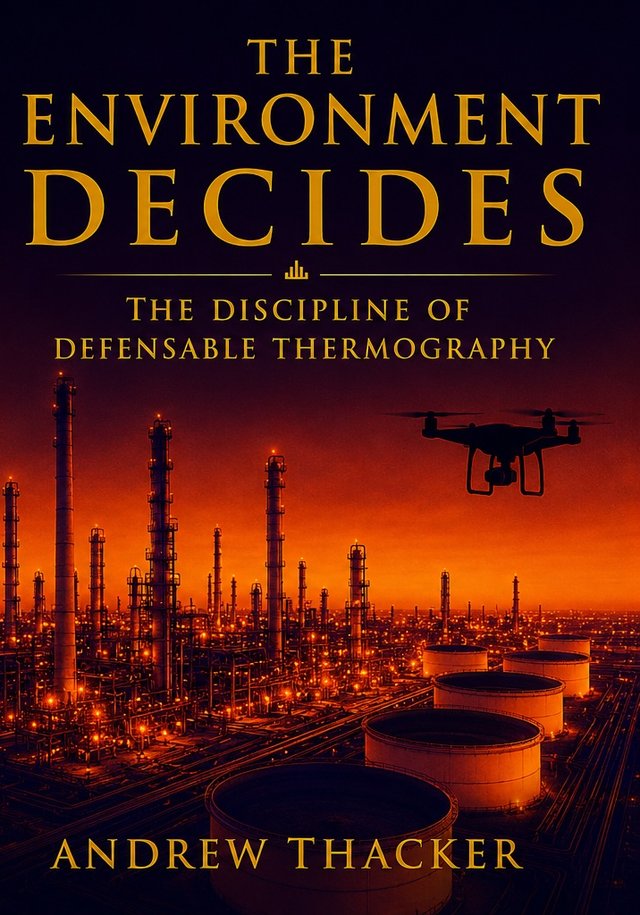


The Environment Decides
From the Frontispiece
A thermal image often arrives with an air of certainty. Its colors are persuasive. Its patterns seem to point directly toward an answer. Yet the camera has recorded only the infrared radiance that reached its detector. It has not identified moisture, leakage, resistance, or cause. Those conclusions belong to the person interpreting the evidence.
This book is about the discipline required in that space between the image and the conclusion.
The Environment Decides does not ask the reader to distrust thermal imaging. It asks the reader to understand what makes a thermal observation trustworthy. Heat transfer, emissivity, reflection, atmosphere, distance, viewing geometry, wind, sunlight, moisture, timing, and thermal history all shape the image before interpretation begins. Some reveal the condition being sought. Others can quietly imitate it.
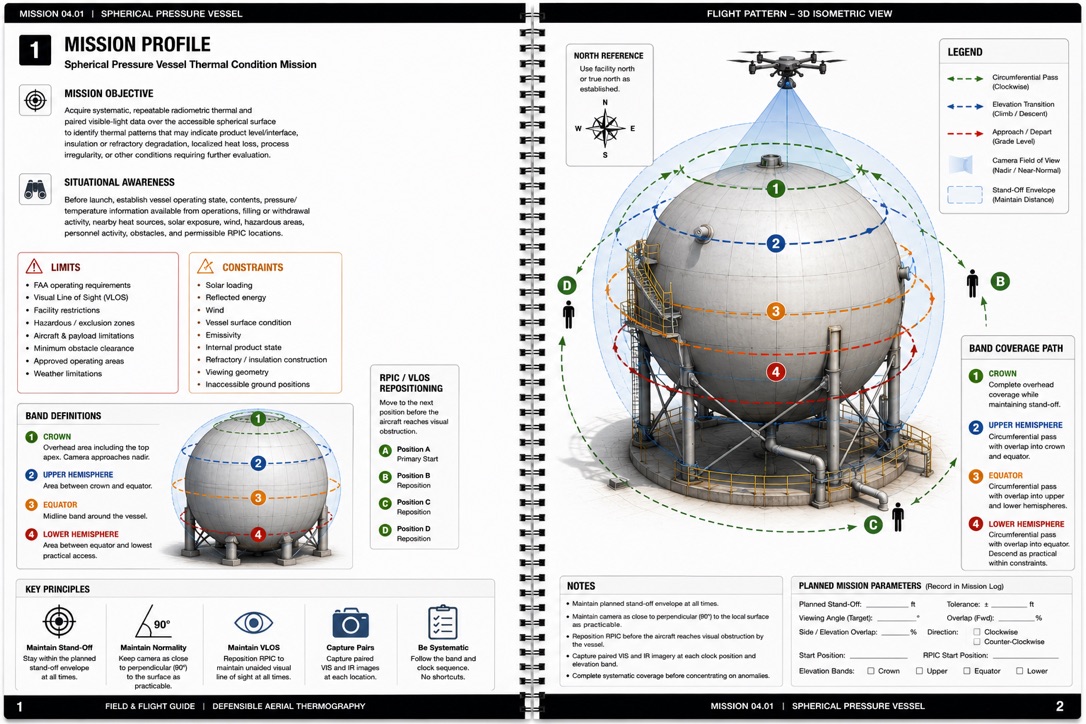
Drawing on four decades of engineering experience and years of field investigation, Andrew Thacker examines that problem across roofs and building envelopes, electrical and mechanical systems, renewable-energy assets, pipelines, storage vessels, and infrastructure. UAS, LiDAR, and multispectral sensing expand what can be observed. They do not remove the need for judgment.
The purpose is not to provide an effortless answer for every thermal pattern. It is to encourage better questions: What else could have produced this response? Were the conditions suitable? Can the observation be independently verified? Does the report claim only what the evidence will support?
The environment is not background to the inspection. It participates in the measurement. Learning to recognize what it has contributed is where defensible thermography begins.
For publication updates and future pre-order information.
Request Availability Notice →