FROM OBSERVATION TO UNDERSTANDING
A better image starts
with a better question.
What is solar loading?
Solar loading is the heating of a surface by absorbed sunlight. Different materials, colors, orientations and shaded areas absorb and release that energy differently. Those differences can reveal a condition — or imitate one.
How do shadows affect thermal imaging?
A shadow changes a surface’s thermal history. Trees, parapets, rooftop equipment and neighboring buildings can create thermal boundaries that have nothing to do with moisture, insulation or failure.

How does wind affect an infrared inspection?
Wind changes convective heat transfer at the surface and can reduce, erase or redistribute useful thermal contrast. The wind at the target matters more than a weather-app number several miles away.
How do I get good thermal images in a downtown high-rise area?
Study the siting first. Nearby towers can block, redirect or accelerate wind and can shade the target at different times. Conditions at street level, on the roof and on an exposed façade may be very different at the same moment.
What about high-rise wind canyons and wind shadowing?
Building geometry can create accelerated flow, sheltered zones, turbulence, wakes and recirculation. These local conditions change convective cooling and can make two parts of the same roof behave differently.
Do mountains or foothills matter?
They can. Terrain and time-of-day wind patterns can change the local airflow around a building. A thermographer should understand the immediate microenvironment rather than assume regional weather describes the target.
THE FIELD REFERENCE
TAKE THE NEXT QUESTION FURTHER
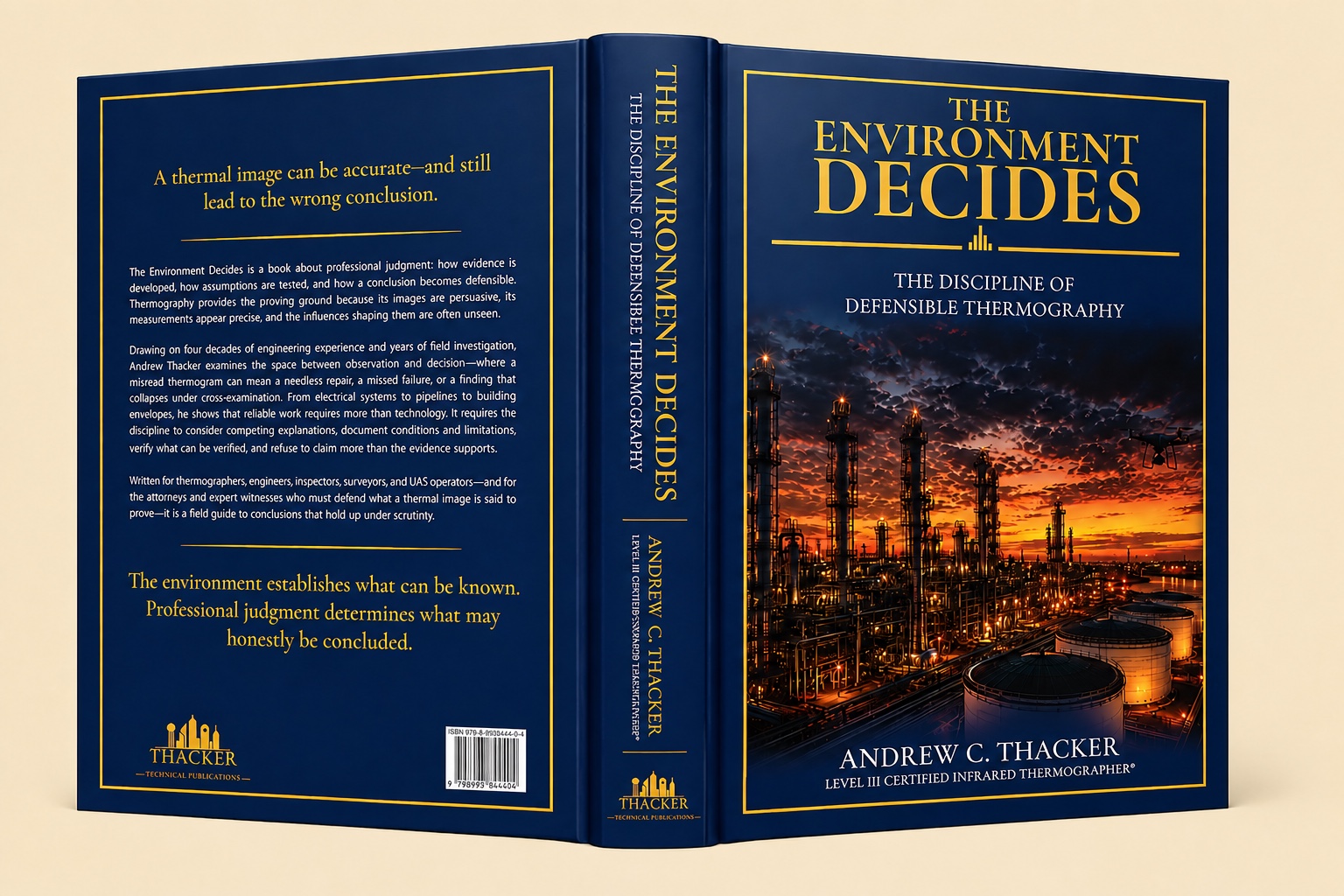
The Environment
Decides.
The Discipline of Defensible Thermography
Understand why the environment belongs at the center of interpretation.
Environmental history. Measurement physics. Competing explanations. The book explores the discipline behind acquiring, interpreting and defending thermal evidence.
- Before the missionPlan the question and the conditions.
- In the fieldReconsider when the scene changes.
- At the deskExamine what your evidence supports.